

Readers will be familiar with the German nuclear phase-out. The Merkel and Scholz governments prematurely shut down twenty gigawatts of nuclear power. Those plants provided energy for 38 million households for less than twenty percent of the cost of gas. The Scholz government closed one power plant thirteen years before its expected retirement date.
But few know that the Dutch government is doing something similar: it is pouring cement down the country’s gas wells. These wells are already inactive; destroying them doesn’t do anything for safety or the environment. The government is demolishing the wells to prevent a future government from reconsidering its decision to stop producing gas.
The power of concentrated losers
The wells are located in Groningen, a province in the north of the country. Prospectors discovered the gas field in 1959 and soon realized it was the largest in Europe. Over the next 60 years, they extracted 2.2 trillion cubic metres of gas. Groningen earned the treasury lots of money – 363 billion euros – and gave Dutch utilities the ability to generate power without relying on foreign countries.
But gas production in Groningen had local downsides. The field is large, shallow, and crossed by small faults, so extraction caused bits of it to shift. In 1986, the region started experiencing small earthquakes. The majority of these quakes registered beneath 1.5 on the Richter scale, too faint for most people to notice. But a small number exceeded 2.0, and a tiny handful 3.0. The earthquakes led vocal Groningers to demand an end to the drilling
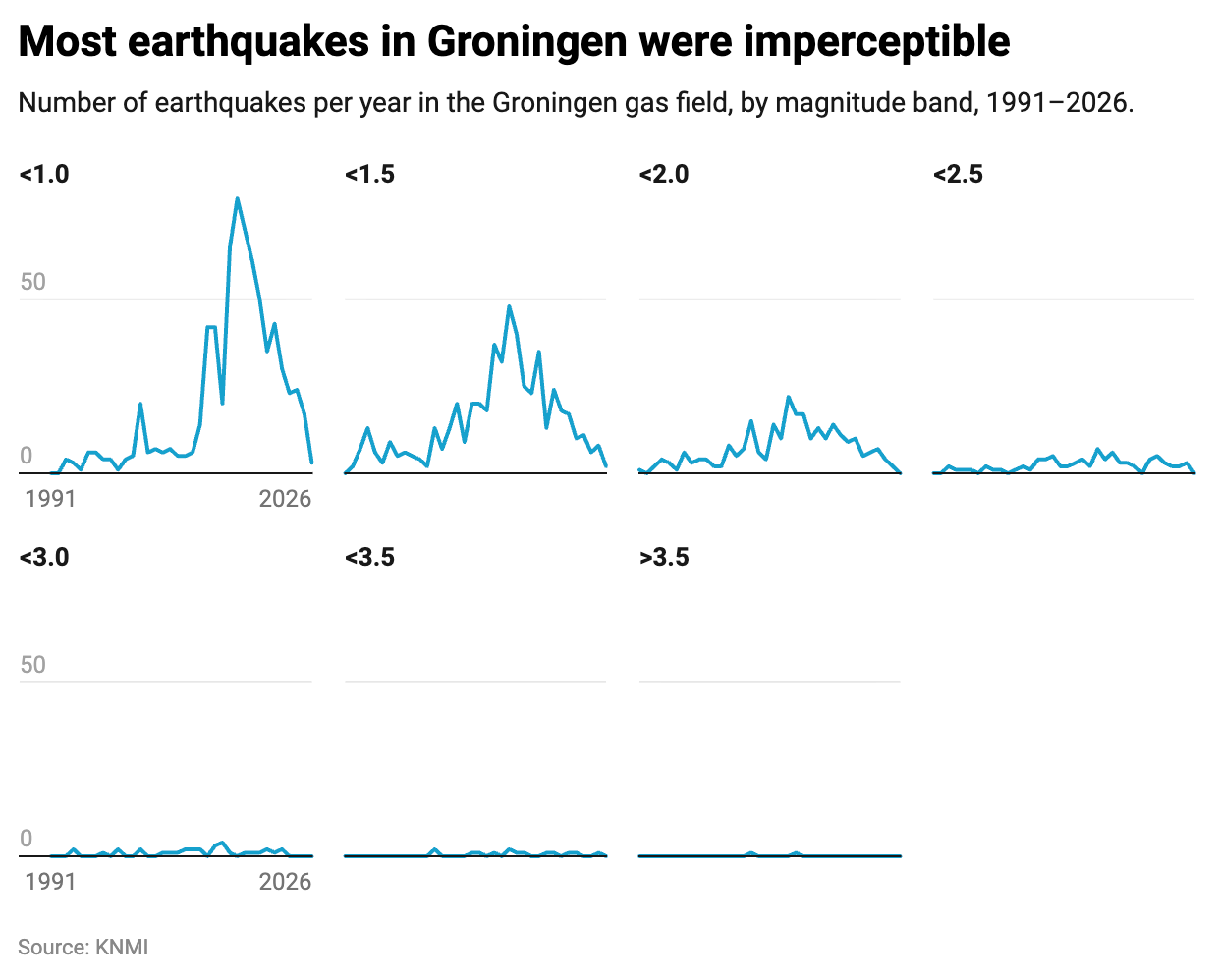
Jesse Frederik, a smart Dutch journalist, has argued that locals greatly exaggerated the harmfulness of the earthquakes.1 But even if they hadn’t, there was a good case to keep drilling. The remaining reserves, some 500 billion cubic metres, are worth around €200 billion at current wholesale prices – enough to pay every single resident of the province €150,000 as compensation and still have 110 billion euros.
And while gas alone is not good for the environment, more gas usually results in less coal usage, not less renewable generation. Norway is one of the world’s largest gas exporters despite its sincere concerns about climate change. (The enlightened Norwegians opened seventy more sites for drilling this past May.)
But like many modern Western countries, the Dutch are increasingly unable to pursue policies with huge numbers of winners and small numbers of concentrated losers. Rather than buy off the Groningers, the cabinet decided to give in to them. In 2018, the cabinet promised to end gas production by 2030. In 2019, it accelerated that deadline to 2023.
The concessions to the losers continued. In 2023, a parliamentary commission released a report announcing that the Dutch government had a ‘debt of honour’ to the people of Groningen, and that economic interests had superseded the interests of Groningers for too long. Hans Vijlbrief, the D66 minister responsible, then decided to fill the wells with 500 metres of cement.
The Mining Council opposed the decision: they said that it was possible and preferable to mothball the facilities. The main scientific advisor to the government also opposed the decision: they argued (and continue to argue) that pausing production was no worse for the environment than plugging the wells was, and preserved much greater flexibility for the government in case of geopolitical necessity or economic crisis.
The Groningen gas field still holds twice as much gas as the EU has imported from Russia since the 2022 invasion of Ukraine. At market value, that gas would be worth enough to increase the Netherlands’ aid to the Ukrainian government thirteenfold.
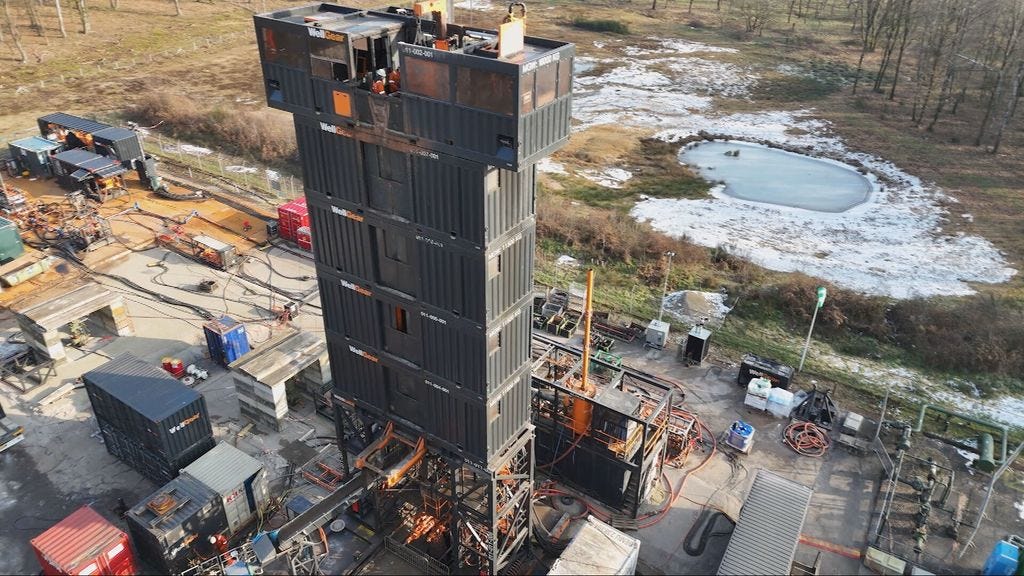
But the politics of the ‘debt of honour’ overcame the national and European interest. A specialised machine is now travelling around the province ripping out kilometres of pipes and filling what is left with thousands of tonnes of cement. It has destroyed 70 of the 300 wells this way so far.
A plea for optionality
This is a story of a few concentrated losers defeating a very diffuse majority of winners. But it is also a story of a government proactively choosing to limit the country’s options.
Destroying the wells does not change the likelihood of additional earthquakes. It does not change the world’s emissions pathway either, given that production had stopped. Its only purpose is to ensure that a future government, faced with different circumstances – a collapse in global LNG production – or different preferences – the Groningers decide that they would rather have more money than fewer tremors – has no ability to change course.
The situation in Groningen is unique, but the effort to reduce options is not. The German Greens chose to speed through the nuclear phase-out, rejecting a pause proposed by their partner in government, the FDP. In the case of one reactor, Neckarwestheim 2, they issued the dismantling permit before the reactor even shut down. An Austrian Green minister cast the pivotal vote in the European council for the European Nature Restoration Laws against the wishes of their coalition, weeks before an election they lost.
Restricting optionality ‘works’. Friedrich Merz opposed Olaf Scholz’s decision to shut down Germany’s remaining nuclear reactors in April 2023, but now says that it is too late to restart them. Future governments do find it difficult to reverse course if the alternative course has become impossible.
But it comes at a cost. The impulse to make a decision irreversible signals a lack of confidence in one’s decisions. If a decision is good, it should be capable of surviving the judgement of voters. That the government feels the need to shield it from such judgement suggests that they are not sure it would.
It is an act of institutional vandalism, raising the stakes of elections. It is also inefficient. Sometimes circumstances change in unforeseen ways. The demand for data centres has suddenly increased the usefulness of baseload power. Though Japan closed every reactor after Fukushima, it dismantled few; more than a dozen have since restarted. Michigan’s Palisades plant closed in 2022; it is now in the final stage of a restart. (Although it didn’t require much foresight in 2023 to think that gas might be geopolitically useful.)
Options are valuable. It would be good for the current Dutch government to prioritize the interests of the Netherlands and Europe over that of Groningen. Failing that, it would be nice for it to allow future governments to reconsider its priorities. For now, the cement-pouring machine is destroying more wells.
Their scale was not exceptional – Italy suffers multiple earthquakes each week larger than the largest in Groningen (3.6 Richter) – and it is unlikely that they could have actually damaged the buildings in the region to the degree that was then claimed: the Dutch government built sixteen types of Groningen house with authentic Groningen bricks and found that only one in 200,000 should have suffered measurable damage. Compensation requests have since inversely correlated with distance from the earthquake and have increased as the earthquakes have decreased.
Fully agree. This is a bad decision that makes the Netherlands more dependent on imported gas and reducing its energy security. Just yesterday, Gasunie, the Dutch state-owned company responsible for managing and transporting gas infrastructure, confirmed that the target for filling gas storage for this winter will not be reached. To me it seems like just another instance of emotionally driven populism and short-term electoral politics from almost all parties in Parliament. Some more strategic, long-term thinking would be nice at a time of increasing energy and 'geopolitical' uncertainty. There are quite a few things going on in the world 'outside', but Dutch politicians often seem to think we're a remote island or something.
Immensely hilarious in context of news today that the gas reserves won't be filled in time for winter, and people won't be able to afford heating.
https://www.dutchnews.nl/2026/08/netherlands-to-miss-gas-target-what-it-means-for-households/